
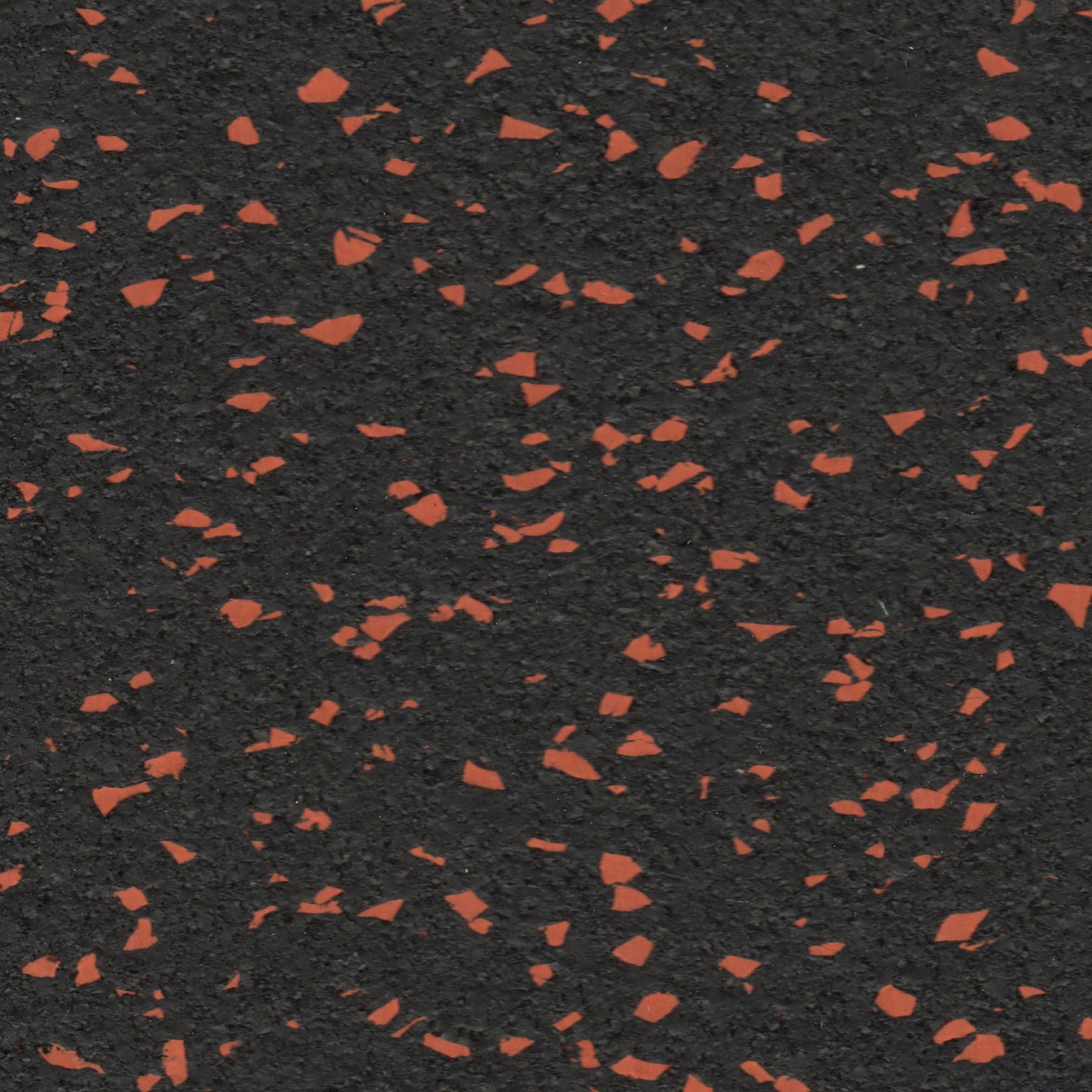
Why rubber, and not a wood-look floor
Rubber is specified where the floor takes punishment that a printed wear layer is not designed for — dropped weights, rolling equipment, constant foot traffic, frequent cleaning.
It is a homogenous material, meaning it is the same composition the whole way through rather than a print under a clear layer. There is no pattern to wear away, which changes how it ages.
What to compare
- Thickness
- Quoted in millimetres. Heavier gauges are specified where impact matters.
- Format
- Supplied as rolls or tiles, which affects seams and how a damaged area can be dealt with.
- Colour
- Typically a dark base with a coloured fleck. The fleck is the design decision, and Oakline's range is filterable by colour.
What homogenous construction changes in practice
Because the colour goes all the way through, a scratch on rubber exposes more of the same material rather than a printed layer underneath. Wear shows as a gradual change in sheen instead of a visible break in the pattern, which is why rubber tends to look acceptable for longer in places that would make a printed floor look tired.
It also means a damaged area can be cut out and replaced with material that matches, rather than needing a pattern to line up. In a tile format that is straightforward; in sheet, it means a seam.
The trade-off is aesthetic range. Rubber looks like rubber — a solid field with a fleck. If the space needs to read as wood or stone, this is the wrong material and no amount of specification will change that.
The markets it is specified for
The manufacturer specifies this rubber line for five markets, and the list is a useful sanity check on whether your space belongs on it.
- Healthcare
- Corridors and treatment areas, where floors are cleaned frequently and hard.
- Assisted living
- Resilient underfoot and consistent in appearance across long runs.
- Education
- Sustained foot traffic and grit carried in from outside.
- Corporate
- Back-of-house, circulation and service areas rather than front-of-house finishes.
- Sports clubs
- Impact from dropped weights and rolling equipment.
Where it fits
Fitness spaces are the obvious case, but the same reasoning applies to clinics, back-of-house areas, plant rooms and anywhere a floor is a working surface rather than a finish.
Oakline stocks 29 rubber products. Where a product’s commercial suitability has been verified, it carries a Commercial badge on its page — and where it has not, no badge is shown rather than a guess.
Ready to price it up?
Add the materials you are considering to a quote list and Oakline will come back with project-specific pricing.