
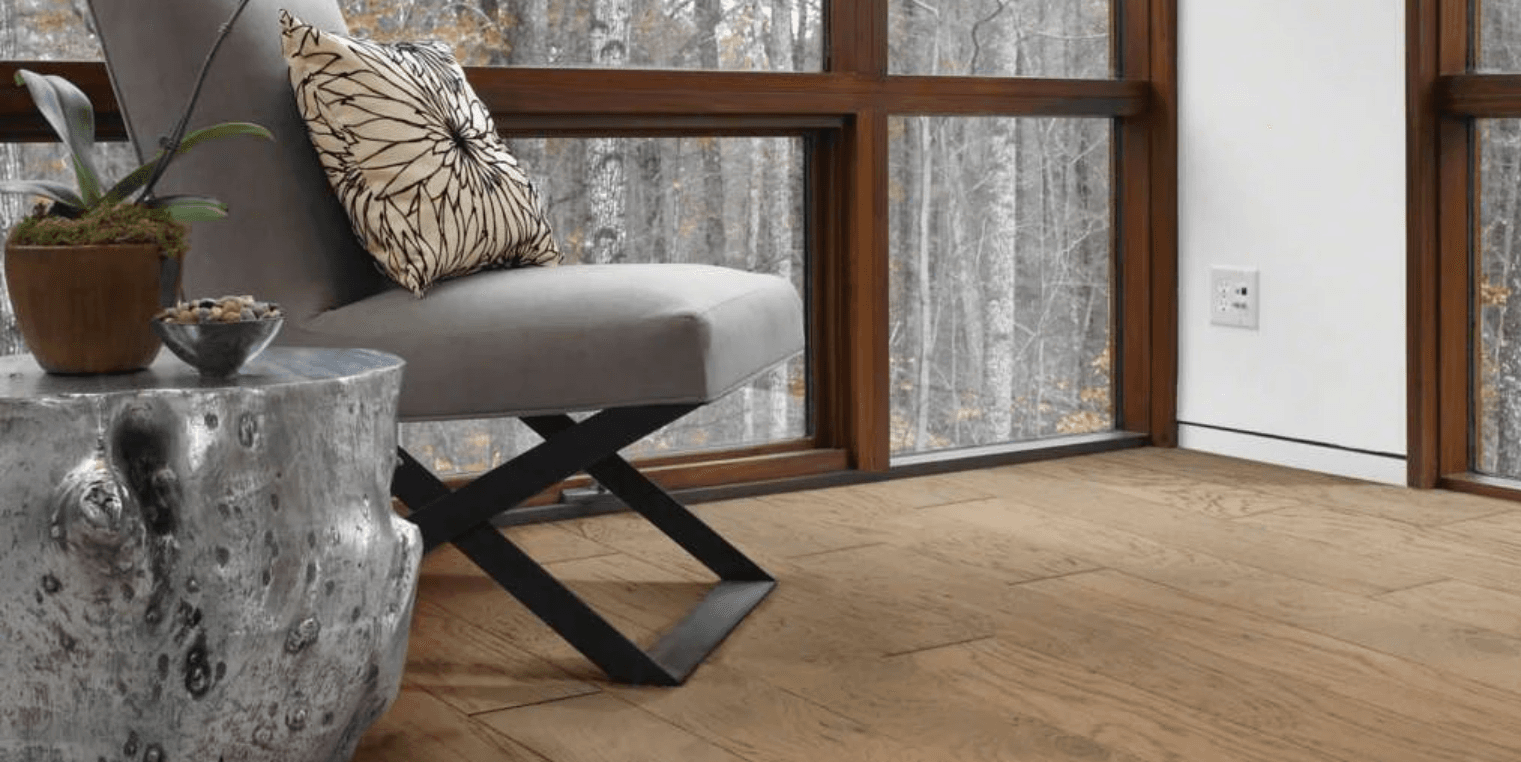
They are not competing versions of the same thing
SPC stands for stone plastic composite. The core is a rigid mineral-and-polymer composite, and the wood appearance is a printed layer under a clear wear layer. There is no wood in it.
Engineered hardwood is real timber. A veneer of hardwood sits over a stable core of plywood or similar, which is what stops it moving the way a solid plank would.
So one is a wood-look resilient floor and the other is a wood floor. That distinction drives everything else.
Water is the clearest dividing line — with one caveat
SPC’s mineral core does not swell when it gets wet, which is why waterproof construction is close to standard across the category. 20 of Oakline’s 22 SPC floors carry a verified waterproof specification.
Engineered hardwood is more stable than solid timber, but it is still wood, and most of it is not waterproof. 1 of Oakline’s 29 engineered hardwood floors is specified waterproof — so it is not none, but it is not the default either.
The caveat worth knowing: waterproof is not the only spec that governs a wet or below-ground room. Manufacturers also publish an installation grade rating, and 10 of Oakline’s engineered hardwood floors are rated Above, On and Below — explicitly approved for basements. For a bathroom or a laundry, waterproof is still the spec to insist on. For a dry finished basement, the grade rating is the one to read.
Radiant heat splits them too
If you are putting a floor over radiant heating, the product has to be rated for it, and the rating is published. All 10 of Oakline’s engineered hardwood floors that carry a grade rating are also rated for radiant heat.
There is a temperature limit behind that rating. The National Wood Flooring Association’s guidance caps surface temperature at roughly 80°F for most engineered wood products, against the older 85°F figure derived from ASHRAE — which itself came from the temperature a person can comfortably stand on, not from what the floor can take.
The practical point is that running a heated floor hotter than the flooring manufacturer allows is a common cause of failures, and it is the kind of thing a warranty claim turns on.
What each brings
- SPC
- Waterproof construction, rigid and dimensionally stable, typically click-together, wear layer quoted in MIL. 1 Oakline SPC floor is FloorScore certified for indoor air quality.
- Engineered hardwood
- Genuine timber surface with real grain and depth, wider plank formats, quoted by species — Oakline stocks Birch, European Oak, Hickory, Indonesia Acacia, Maple, Sliced French Oak, Sliced Hickory, Teak, Walnut and White Oak.
- Specs only hardwood publishes
- Shade variation (CV1–CV4), surface texture, edge profile and species. These describe how a wood floor will actually look; SPC is printed, so they do not apply.
Choosing between them
Pick SPC when moisture is a live risk, when the space takes heavy or commercial traffic, or when you want a hard-wearing surface at a consistent specification across a large area.
Pick engineered hardwood when the material itself matters — when you want real wood underfoot, and either the room is above grade or the product carries a below-grade rating.
One habit worth forming: on any shortlist, compare the published spec tables rather than the category names. Two SPC floors can differ by 10 MIL of wear layer, and two hardwood floors can differ by an entire grade rating. The category tells you much less than the spec sheet does.
Oakline stocks both, so the choice is not being nudged by what happens to be available.
Ready to price it up?
Add the materials you are considering to a quote list and Oakline will come back with project-specific pricing.